
Hubbard County Arrest Records and Charges
Hubbard County arrest records are tied to law-enforcement activity by the Sheriff's Office or another arresting agency. The jail or booking side may show a person's name, booking number, custody date, charge text, severity, bail amount, bail type, court date, court branch information, holds, hold reason, and hold agency. The Hubbard County Inmate Locator is the public current-custody tool, but the sheriff's roster disclaimer says booking information should not be relied on for legal action and that a booking does not establish guilt or conviction.
Court charges after arrest are different. The charge record begins when a citation, complaint, or other charging document becomes part of the District Court case. Hubbard County does not have a separate local municipal or justice court record venue identified in official court sources. Criminal charges filed in the county are District Court records, while the County Attorney is the prosecutor who brings charges, tries cases, and makes sentencing recommendations. Current custody details belong with inmate records; the final court case file and sentencing history belong with Hubbard County criminal court records.
| Record Type | Primary Source | What It Usually Shows |
|---|---|---|
| Arrest or booking record | Hubbard County Sheriff's Office and detention systems | Custody status, booking data, current listed charges, bail, court date, and hold information. |
| Filed court charge | Hubbard County District Court | Charge count, statute, severity, court events, plea, disposition, and sentencing path if public. |
| Prosecution decision | Hubbard County Attorney | Which charges are brought, changed, tried, dismissed, or used for sentencing recommendations. |
Charges After Arrest in Hubbard County
After an arrest, the court charge record depends on what prosecutors file and what the District Court accepts into the case file. The research identifies the County Attorney as the chief prosecutor for crimes occurring within Hubbard County. The office prosecutes felony offenses, misdemeanors, and gross misdemeanors within its jurisdiction, and it also handles juvenile prosecution, victim rights, restitution requests, and related court filings. The filing does not prove guilt. It starts the court process.
| Charging Document | Who Uses It | How It Fits the Court Charge Record |
|---|---|---|
| Complaint | Often prepared through law enforcement and prosecution channels. | Common charging paper that states the alleged offense and supporting basis for the court case. |
| Information | Filed by the prosecutor where procedure allows. | Formal charge statement that can define the counts moving forward in District Court. |
| Indictment | Used through grand jury process for certain serious matters. | Formal accusation that can start or define prosecution on serious felony allegations. |
The Hubbard County Attorney page is the local source for prosecution roles.

The prosecutor source confirms why an arrest entry and a filed charge can differ: filing choices are made after law-enforcement contact.
Hubbard County Arrest Record Fields
The jail roster side is strongest for current custody and booking context. The Hubbard County Inmate Locator search fields include last name, first name, gender, and year of birth. Its result and profile data can include booking number, DOB, age, sex, race, height, weight, facility, cell location, eligible release date, custody date, booking status, court date, court branch information, case details, charges, severity, bail amount, bail type, holds, hold reason, and hold agency. These fields are arrest and custody clues, not proof that a court conviction exists.
| Booking or Charge Field | How to Read It |
|---|---|
| Charge | The offense text or charge description connected to the booking or case detail grid. |
| Severity | The listed level, such as misdemeanor, gross misdemeanor, or felony when shown by the system. |
| Bail amount and bail type | Release-related data that may change after court action or bond posting. |
| Court date | A scheduled court appearance tied to the booking or listed charge. |
| Court branch info | The court routing information connected to the jail record. |
| Hold reason and hold agency | Whether another agency or legal hold affects custody status. |
For court charges after arrest, compare those jail fields with the District Court case record. A booking charge can be amended, reduced, dismissed, or replaced by a different filed count after prosecutor review.
Hubbard County Charge Status
Charge status is one of the most important parts of an arrest-to-court-charge search. A filed count may be pending at first appearance, changed before an omnibus hearing, resolved by plea, dismissed by court order, or folded into sentencing on a different count. Hubbard County calendar examples include hearing types such as Initial Appearance - Rule 8, Arraignment, Omnibus Hearing, Pre-trial, Review Hearing, and Probation Violation Hearing. Those events can help show where the charge sits in the case path.
| Status | Meaning for Charges After Arrest | Where to Verify |
|---|---|---|
| Pending | The accusation has not reached a final court outcome. | Current District Court case events and next hearing entries. |
| Amended or reduced | The prosecutor or court record reflects a changed count, severity, or charge theory. | Register of Actions, complaint amendments, and disposition entries. |
| Dismissed | The court record shows that a count or case did not proceed to conviction. | Disposition or order entries in the District Court case. |
| Convicted | A guilty plea, verdict, or conviction entry exists for the count. | Final disposition, sentence, and judgment entries. |
Hubbard County Charges vs Convictions
A charge should not be read as a conviction. The court case may show allegations that were dropped, dismissed, amended, or resolved without a conviction on that count. The research also notes that a case type does not prove the final sentence level. For Hubbard County arrest records and charges, the practical rule is to read forward from booking to filed charge, then from filed charge to disposition, then from disposition to sentence.
| Comparison | Charge | Conviction |
|---|---|---|
| Basic meaning | Accusation after arrest or filing. | Final guilt outcome entered by plea or verdict. |
| Record location | May appear in booking data and District Court filings. | Appears in disposition, judgment, and sentence records. |
| Can change | Yes, charges can be amended, reduced, added, or dismissed. | Less fluid, but later expungement or appeal can affect access or outcome history. |
| Main risk | Treating an unproven accusation as a final result. | Missing count-by-count outcomes in a multi-charge case. |
Public Access for Arrest Records
Public access depends on whether the record is held by a law-enforcement agency or by the court. Minnesota Statutes chapter 13 is the Government Data Practices Act for state and local government data outside the judiciary. Minn. Stat. sec. 13.03 states the public-data presumption: government data are public unless a law makes them nonpublic. For arrest and investigative data, Minn. Stat. sec. 13.82 controls many law-enforcement data rules.
Judicial records follow a different source. Minn. Stat. sec. 13.90 points access for court records to court rules rather than the general data-practices act. That means a sheriff-held arrest record, a jail roster entry, and a District Court charge record may have different request routes and different redactions. Hubbard County's data-practices request process can be used for county-held data not online, while certified court documents must come from court administration.
Minnesota Statutes chapter 13 is one of the official legal sources used for Hubbard County arrest records and charge access.
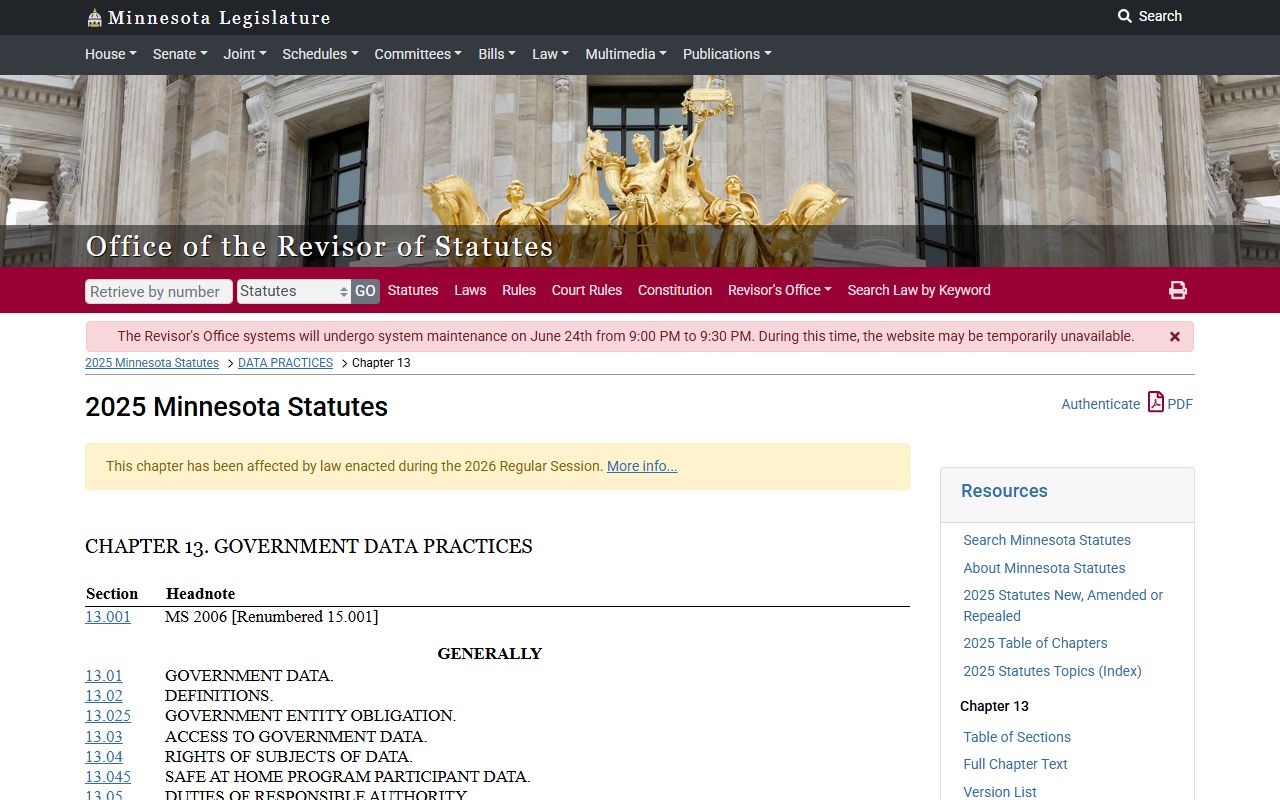
It is most useful for sheriff-held and county-held data, while court records have a separate judicial access framework.
Minn. Stat. sec. 13.03 explains the baseline public-data presumption for government data.
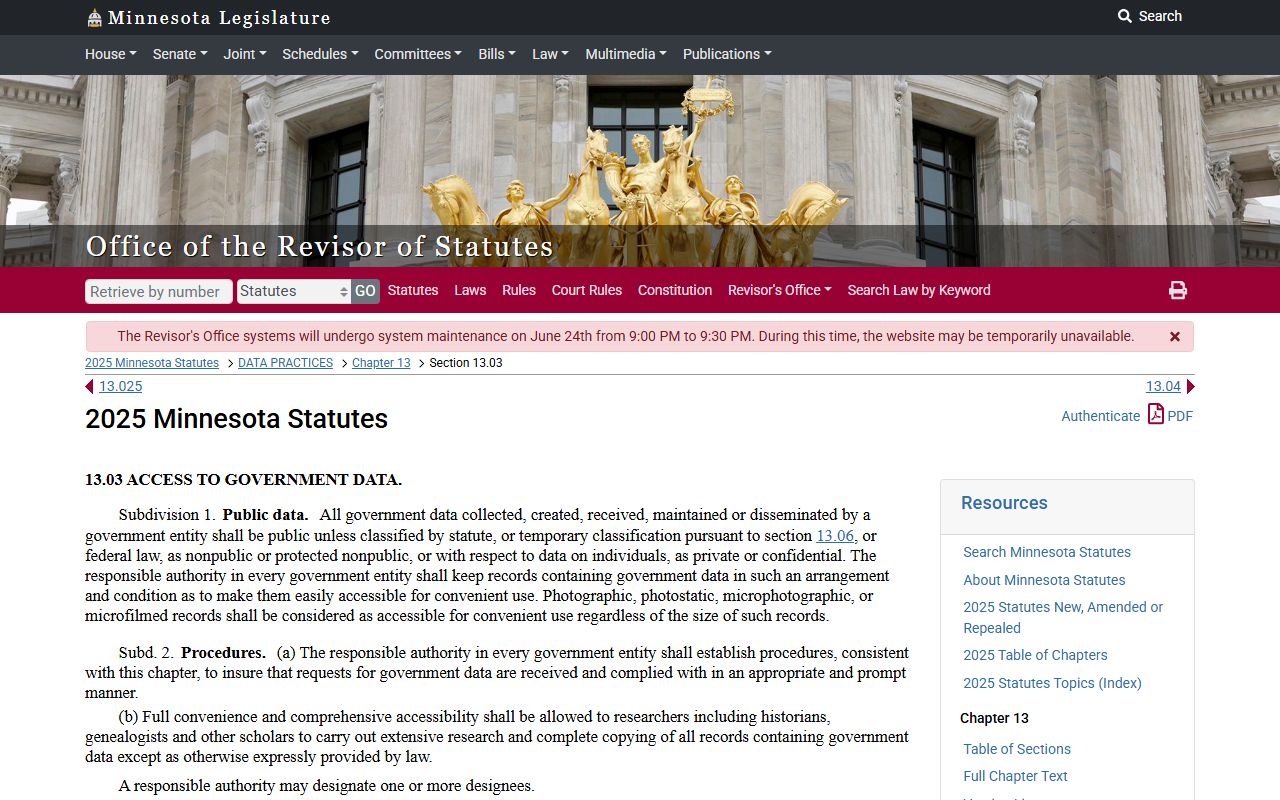
That presumption still yields to laws that classify active investigation, juvenile, sealed, or protected data as not public.
Hubbard County Law Enforcement Limits
Law-enforcement data can be public, private, confidential, or protected depending on the type of data and investigation stage. Section 13.82 is especially relevant to Hubbard County arrest records because it covers law-enforcement data. Active investigation data, juvenile information, victim or witness details, sealed warrants, and other protected items may not be released through an ordinary request. A current jail roster entry may show enough to identify custody and charge context without releasing the full investigative file.
Access note: A public booking entry is not the same as a complete police report, prosecutor file, or certified court judgment.
Minn. Stat. sec. 13.82 is the law-enforcement source assigned for Hubbard County arrest records in the manifest.
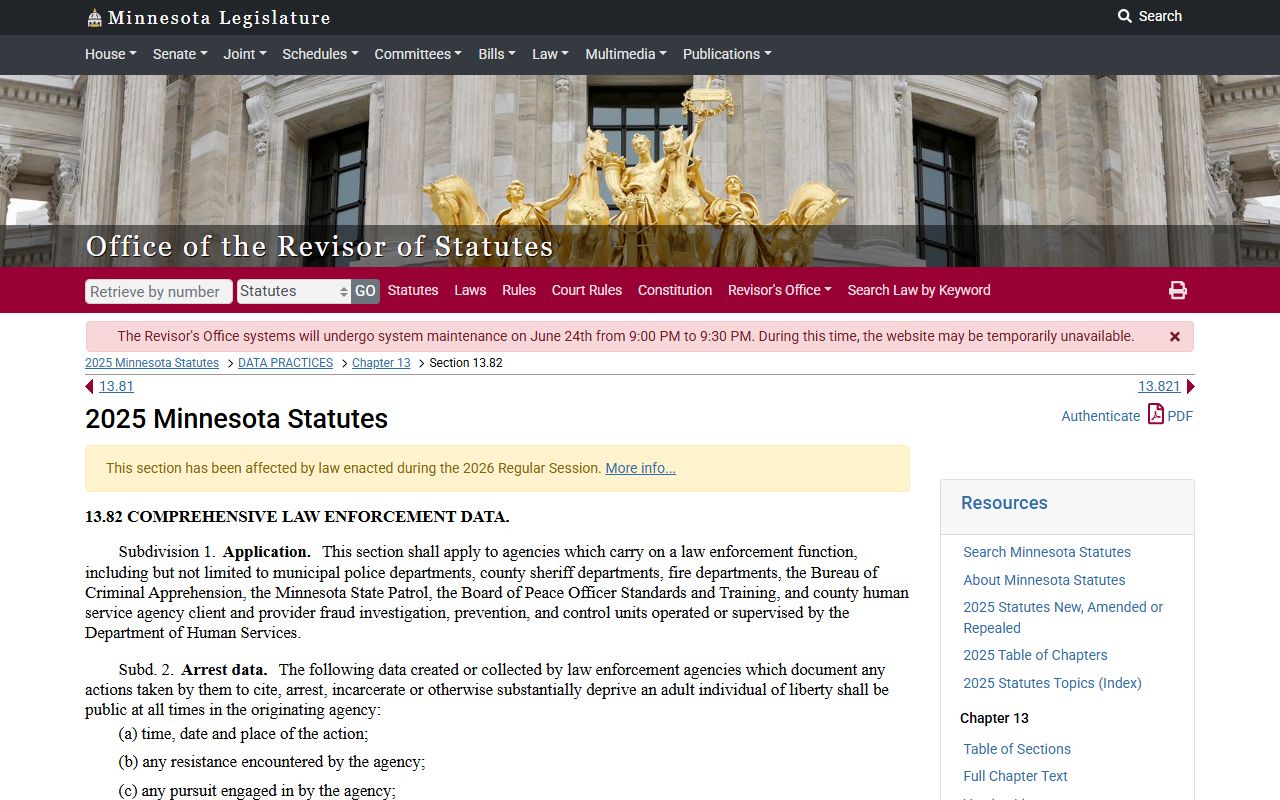
The statute supports a careful fallback chain: jail roster for custody, sheriff records request for releasable law-enforcement data, and District Court for filed charges.
Hubbard County Court Charge Limits
Court charge records are governed by the Minnesota Rules of Public Access to Records of the Judicial Branch. The rules can make courthouse access broader than remote online access. Remote systems may omit personal identifiers, victim and witness information, juror information, financial account data, and some document categories. MCRO terms also state that pending criminal, traffic, and petty misdemeanor cases with no conviction do not return by defendant-name search, but they can return by case number. A case number from a citation, notice, or court paper can therefore be more reliable than a name search for pending charges.
Minn. Stat. sec. 13.90 is the judicial-branch records statute, separate from the law-enforcement data act.
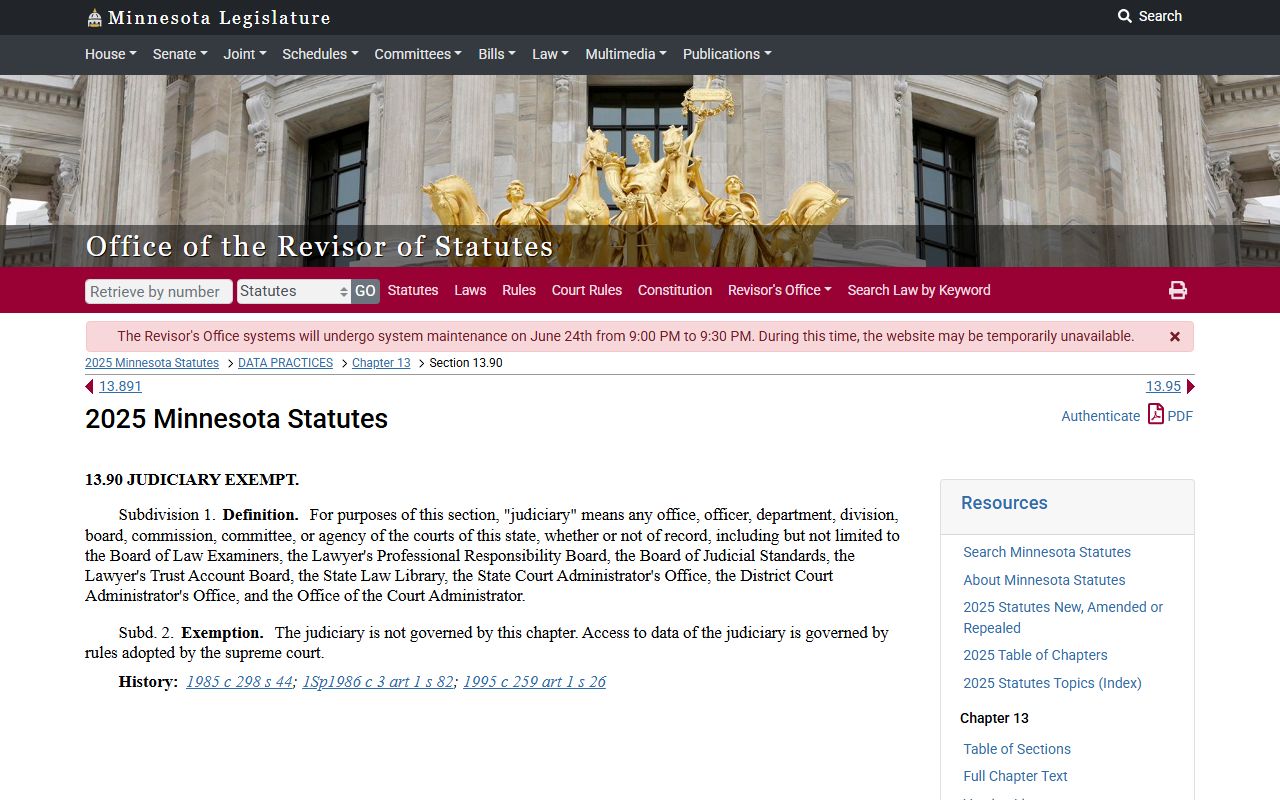
That split explains why one office may answer a booking-data question while another office must certify a filed charge or final disposition.
Restricted Hubbard County Charge Records
Juvenile charges, CHIPS-related material, sealed records, expunged cases, active investigation data, and protected identifiers can be restricted. Domestic Abuse Order for Protection and Harassment Restraining Order case types also have remote-access limits under the MCRO terms because of federal law. If an arrest seems to have occurred but no charge appears remotely, the reason could be no filed court case, a pending name-search limit, case-number-only access, a juvenile matter, sealed data, or a court rule that narrows online access.
| Access Issue | Effect on Arrest or Charge Search | Best Next Channel |
|---|---|---|
| Pending case name limit | A no-conviction pending case may not return by defendant name. | Search by case number if available. |
| Juvenile or CHIPS matter | Remote access may be blocked or heavily limited. | Contact court administration if authorized. |
| Active investigation | Law-enforcement details may be restricted. | Use sheriff records request only for releasable data. |
| Sealed or expunged court record | Public search may not show the record. | Verify status with the court source. |
The Minnesota public defender source is relevant when a charge can lead to jail time and the defendant cannot afford counsel.
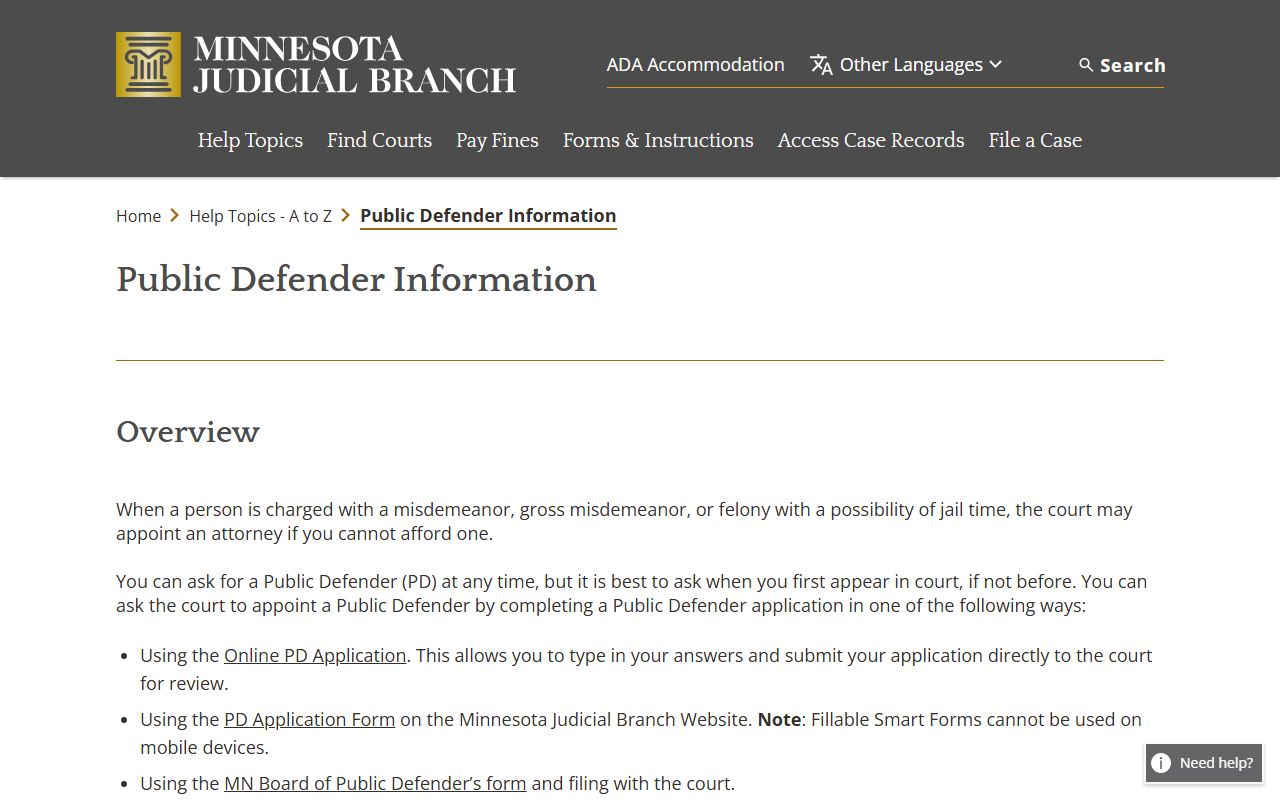
Public defender appointment does not change public-record access by itself, but it often appears in the court case history.
Public Record Search
Sponsored Results