
Hubbard County Court Dockets
A court docket is the event record for a case. In Hubbard County, docket information can mean the public daily court calendar, MCRO hearing records, or the Register of Actions inside a case file. The daily calendar tells readers what is scheduled. The Register of Actions shows filed events and case activity over time. A full court record can include pleadings, motions, orders, judgments, public documents, and certified copies that go beyond the docket list.
Hubbard County District Court is the local trial court for civil, family, probate, juvenile, criminal, and traffic matters filed in the county. Minnesota does not identify a separate county court, justice court, or municipal court venue for Hubbard County records. That means court dockets for local trial matters route through District Court and Minnesota Judicial Branch systems rather than a separate city or township court portal.
The Ninth Judicial District page places Hubbard County within a 17-county northwest Minnesota district. District administration handles regional policy and administration, while Hubbard County District Court hears the local cases and supplies local calendar information.
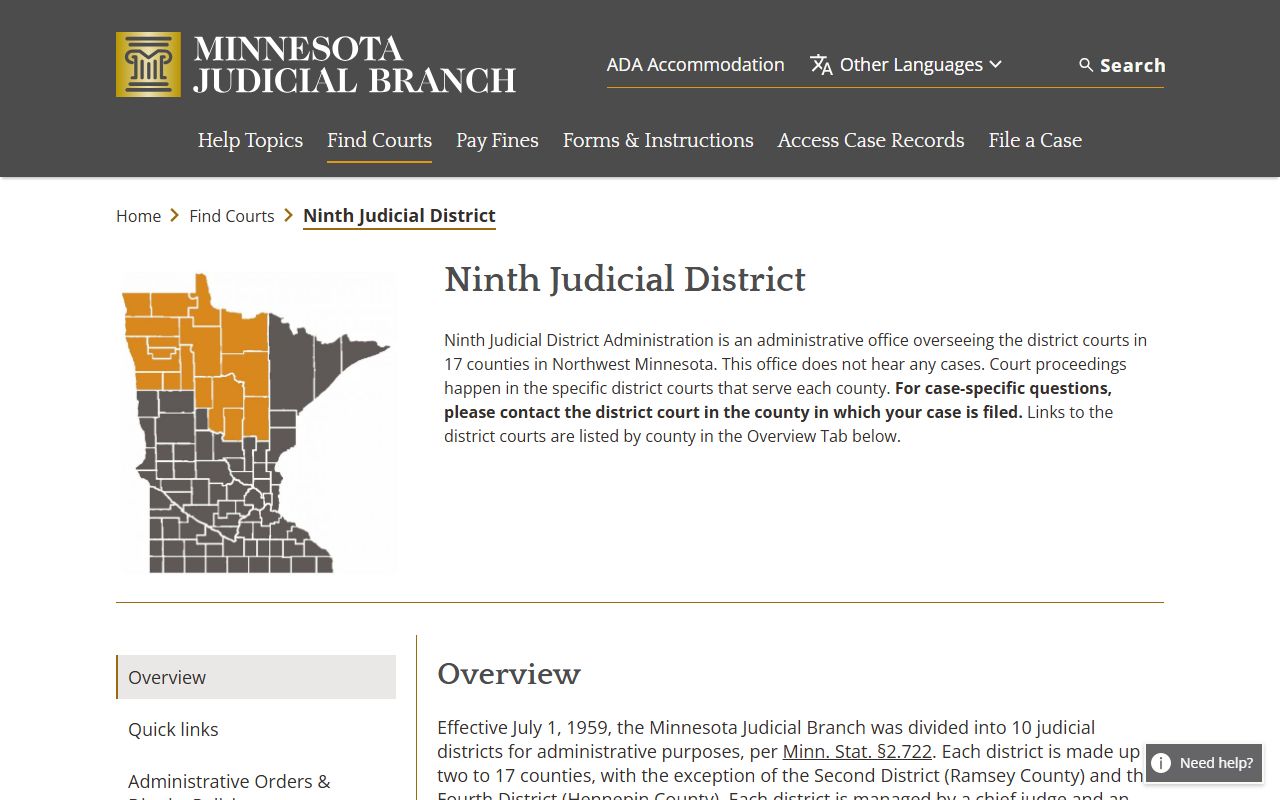
The Ninth Judicial District context helps explain why Hubbard County dockets sit inside a regional Minnesota District Court structure.
Hubbard County Daily Court Calendar
The most direct docket source is the official Hubbard County daily court calendar PDF. The research source states that calendar information is posted at 7:00 a.m. each business day and updated hourly. Printed lobby or courtroom calendars are described as the most current daily information, so a remote calendar should be treated as a public scheduling aid rather than a guarantee that no same-day change has occurred.
The daily calendar is especially useful when a person has a known hearing date or wants to confirm whether a public hearing appears for the day. It may exclude confidential cases and cases that are not remotely accessible. A sealed juvenile matter, a restricted child-protection matter, an order-for-protection case, or another nonpublic record may exist without appearing in a public remote calendar.
| Calendar Field | What It Shows |
|---|---|
| Party Name | The party name shown for a public scheduled hearing. |
| Hearing Location | The courtroom or hearing location, with source examples such as Court Room 1. |
| Hearing Date and Time | The scheduled date and time for the hearing. |
| Judicial Officer | The judge or officer assigned to the hearing, with source examples including Eric P. Schieferdecker. |
| Hearing Type | The event type, such as arraignment, review hearing, omnibus hearing, pre-trial, or probation violation hearing. |
| Connection Type | The party's relationship to the case or event when shown. |
| Case Number | The District Court file number tied to the hearing. |
Local case number examples from the calendar include 29-CR-25-1214, 29-CR-25-1257, 29-JV-26-15, 29-CR-24-839, and 29-CR-26-330. The county prefix in these examples is 29. The code CR marks criminal examples, and JV marks a juvenile example. The year and sequence follow the case-type code.
Search Hubbard County Dockets Online
MCRO supplies a second docket route through Hearing Search. Hearing Search is useful when the daily calendar is too narrow or when a date range, case number, attorney, party, or judicial officer search is more practical. MCRO Case Search can also lead to a Register of Actions, which is the chronological docket or event list inside a case record.
- Start with the daily calendar when the question is about today's public hearing schedule.
- Use MCRO Hearing Search when a date range, party name, case number, attorney, or judicial officer search is needed.
- Select Hubbard County as the court location when the portal offers county filtering.
- Open the matching case record in MCRO when the hearing entry needs case context.
- Contact Hubbard County Court Administration if the schedule affects appearance, filing, or certified-record needs.
MCRO terms matter for dockets because pending criminal, traffic, and petty misdemeanor cases with no conviction do not return by defendant-name search, but they do return by case number. For that reason, the case number from a citation, notice, summons, or prior court paper is often the best search key.
Hubbard County Hearing Search Fields
The Hearing Search field set differs from the Case Search field set. It is built for scheduled events rather than full file review. A user may search by name, case number, judicial officer, or attorney, then use date and location filters. The source inventory identifies the portal as free remote access, but the same Rule 8 limits still apply.
| Field Label | Type | Required | Notes / Format |
|---|---|---|---|
| Search tab | Tab | Yes | Name, Case Number, Judicial Officer, or Attorney. |
| Hearing Date | Date or range | No | Search exact date or date range. |
| Case Category | Choice | No | Same broad category concept as case search. |
| Court Location / County | Selector | No | Select Hubbard County to narrow local hearings. |
| Party / Attorney fields | Text | Depends on tab | Name-based lookup with attorney and judicial-officer options. |
The Minnesota court hierarchy summary gives the broader setting for these dockets: District Courts are trial courts, the Court of Appeals is the intermediate appellate court, and the Supreme Court is the court of last resort.
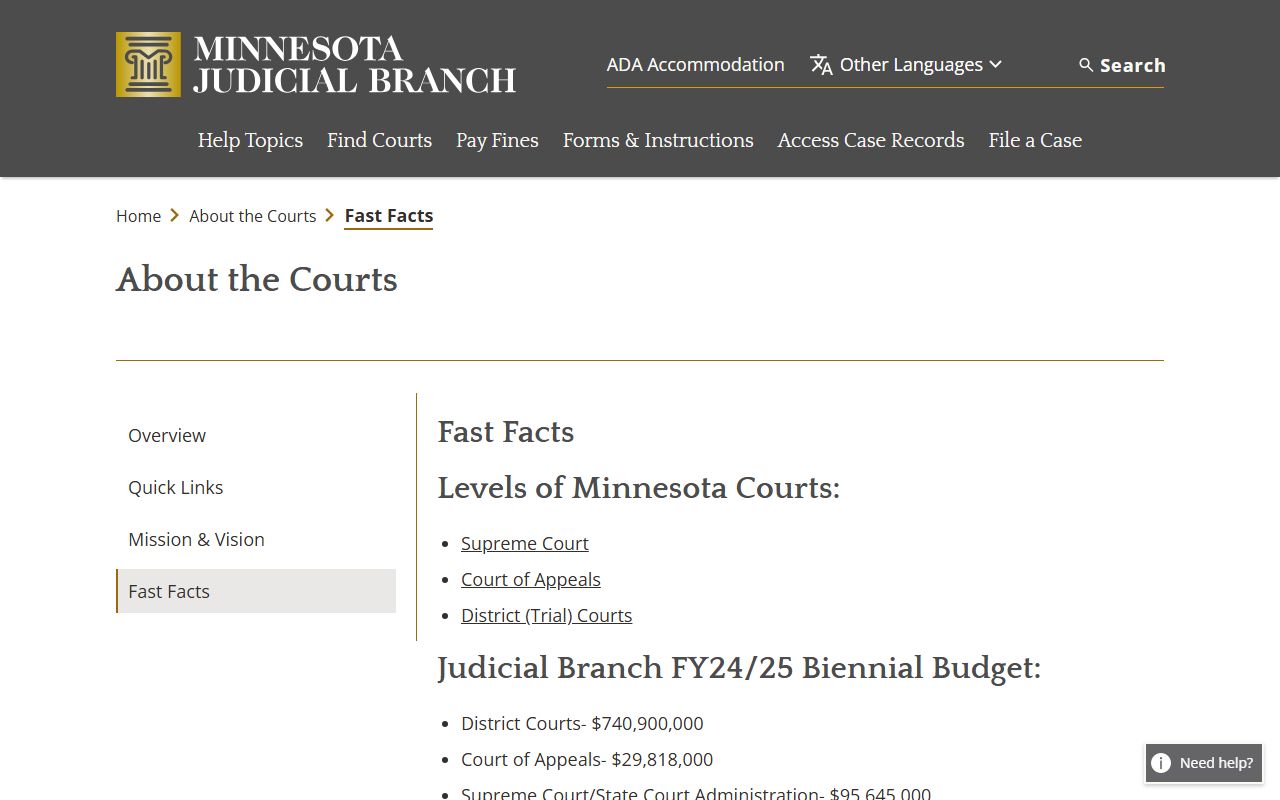
The hierarchy source helps distinguish a Hubbard County District Court hearing from later appellate docket activity.
Courts Publishing Hubbard County Dockets
Hubbard County docket access starts with the local District Court. Appeals from District Court generally move to the Minnesota Court of Appeals, and further review may be sought in the Minnesota Supreme Court when allowed. The court hierarchy matters because a District Court docket tracks trial-level events, while appellate dockets track review of an order or final decision.
- Hubbard County District Court handles local civil, family, probate, juvenile, criminal, and traffic trial matters.
- The Ninth Judicial District provides regional administration for Hubbard and 16 other northwest Minnesota counties.
- The Minnesota Court of Appeals reviews final decisions from trial courts and some agency or local-government decisions.
- The Minnesota Supreme Court is the state's court of last resort and sets statewide rules.
The official Minnesota Court of Appeals page is relevant when a Hubbard County District Court decision has moved beyond the trial court. It is not a replacement for local District Court calendar searches.
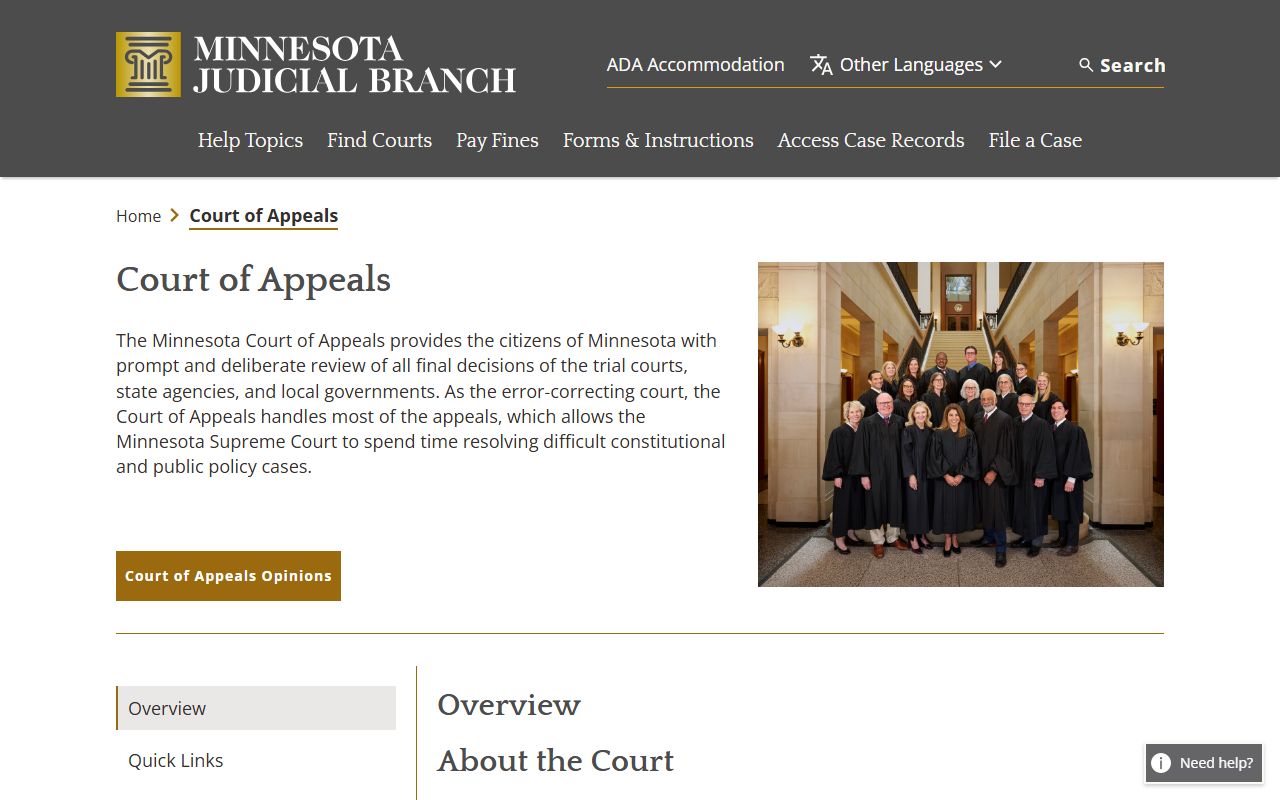
Appeal records are a different docket layer from the Hubbard County hearing calendar and District Court Register of Actions.
Hubbard County Dockets vs Case Records
A docket is a map of case activity. A full case record is the broader file. The docket may show that a motion was filed, a hearing was held, or an order was entered. The full record may include the motion, affidavits, exhibits if public, written order, judgment, sentence, or certified copy. This distinction matters when a reader needs proof for court, employment, licensing, title, collection, or appeal purposes.
| Point | Docket or Calendar | Full Case Record |
|---|---|---|
| Primary use | Track hearings and events. | Review filings, orders, outcomes, and documents. |
| Common source | Daily calendar, MCRO Hearing Search, Register of Actions. | MCRO Case Search, courthouse terminal, court administration. |
| Certified copy | A docket screen is not certified. | Certified copies come from court administration. |
| Remote limits | Confidential hearings may not appear. | Some public documents and older filings may not appear remotely. |
For full case-file context after checking a docket, the general Hubbard County court records search route explains MCRO Case Search, document access, copy requests, and Rule 8 limits.
Read Hubbard County Docket Entries
Hearing labels should be read as events, not final results. An arraignment is an early criminal hearing. An omnibus hearing is a Minnesota criminal pretrial hearing. A review hearing may monitor compliance, progress, or a continuing court issue. A probation violation hearing concerns an allegation that a probation term was violated. A pre-trial hearing may address readiness, settlement, motions, or scheduling.
Party labels also need care. Plaintiff means the person or entity that starts a civil case. Defendant can mean the sued party in civil court or the charged person in criminal court. Petitioner and respondent are common in family and probate-style cases. Disposition means the court's outcome or resolution, while judgment is the final enforceable decision in a civil or monetary matter.
Note: A scheduled docket entry can change, so call court administration before relying on a remote calendar for appearance details.
The official Minnesota Supreme Court page completes the state court structure for docket readers because the Supreme Court is the top appellate court and rulemaking authority.
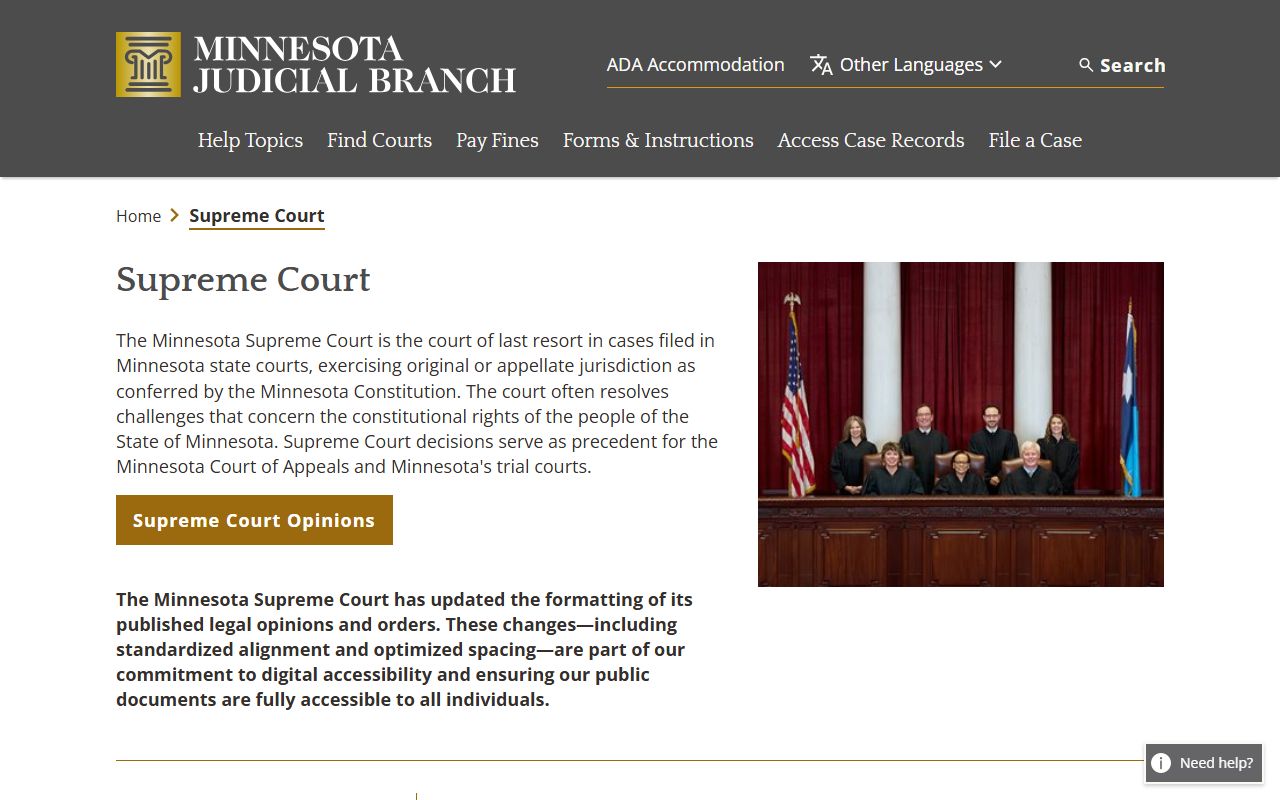
The Supreme Court source is useful background when a Hubbard County matter reaches the highest level of Minnesota review or when statewide rules affect docket access.
Hubbard County Docket Questions
For appearance questions, hearing changes, local calendar confirmation, and certified court records, the public-facing office is Hubbard County Court Administration. The District Court page identifies Carissa Scholz as Court Administrator and lists the court at the Hubbard County Courthouse in Park Rapids. The local court page also links to calendars, fees, ADA accommodation, language access, eFiling, jury service, and court forms.
Use the court phone when a remote docket entry affects travel, appearance timing, or a filing deadline.
Hubbard County District Court
301 Court Avenue
Park Rapids, MN 56470
218-732-5286 or 218-732-0137
Monday-Friday, 8:00 a.m.-4:30 p.m.